
Latest Articles
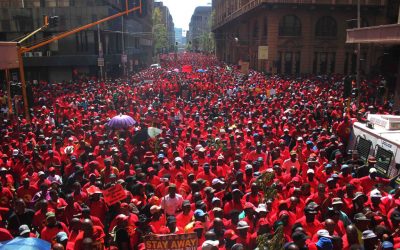
Strikes and the law
The right to strike is recognised in most so-called western democracies, and is considered to be a necessary element of a trade union’s options when a deadlock is reached with an employer on various agenda items such as wage negotiations. Some commentators would argue...

The terrible twins: insubordination and insolence
You’ll often find the terrible twins, insubordination and insolence, hand in hand. Employees have a common-law obligation to subordinate themselves to the legitimate authority of their employer, and to the extent that they refuse to do so, they are insubordination....

Weed and the Workplace, what now?
On 18 September 2018, the Constitutional Court handed down its much publicised cannabis judgment which has far reaching implications in regards the private cultivation and/or use of cannabis. This is the Minister of Justice and Constitutional Court Development and...
Taking goods without permission is theft
It should go without saying, that employees have an absolute employment obligation to be honest at all times, in the course of their employment with an employer. This even extends to employees furthermore having an obligation to expose the dishonest acts of their...

Probation is a workplace trial period
Probation periods are dealt with in some detail, in Section 8 of Schedule 8 of the Labour Relations Act (Code of Good Practice: Dismissal). To begin with, it is imperative that employers include a probation period in contracts of employment, and equally imperative...

Executive performance dismissals differ from the norm
Our case law authority has, for some time, recognized that the pre-dismissal procedures required to be applied in cases of poor work performance dismissals for ordinary employees, do not apply to quite the same degree when dealing with senior managerial or executive...
Don’t use your phone whilst driving a forklift
One of the challenges faced by employers is the use of personal cellphones by employees during working hours. This is particularly problematic when the use of personal cellphones at work poses a risk to health and safety. This was the set of circumstances that was...
Minor acts of theft can justify dismissal
There are numerous CCMA and Bargaining Council arbitration awards and Labour Court judgments which have held that, in certain circumstances, cases of minor theft do not necessarily warrant dismissal. That’s not always true however. There are indeed circumstances of...

Yet another social media rant leads to dismissal
Unfortunately, but not unsurprisingly, employee postings on social media platforms which put the good name of their employer into disrepute, are becoming increasingly common. More often than not, the social media postings are of such a nature that the dismissal of the...
When it’s one person’s word against another
From time to time, disciplinary cases evolve in which there is only one employer witness, whose evidence is, invariably, contested by the employee. It’s the “one person’s word against another case”. In more legal parlance, the chairperson, or Commissioner, is faced...
What if the employer only has one witness to prove its case?
Disciplinary hearing verdicts depend on whether the employer can prove, on a balance of probabilities, that the employee is guilty of the misconduct alleged. Put differently, the probabilities that the employee is guilty must be greater than the probabilities that...

Circumstantial evidence: when there are no eye witnesses
There are times when employers seek to prove that an employee is guilty of misconduct. When in fact, there were no eye witnesses. Such cases, rather than relying on direct evidence, rely upon circumstantial evidence. Section 192(2) of the Labour Relations Act...