
Latest Articles

Incompatibility can be a case of misconduct or incapacity
Incompatibility between an employee and his or her colleagues can, and often does, result in fair dismissal, on grounds of either misconduct or incapacity. It is a set of circumstances in which an employee is responsible for an irretrievable breakdown in harmony...
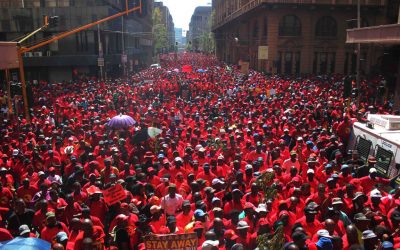
Can employers object to employee t-shirts?
How far can employers go in banning employees from wearing t-shirts which the employer considers inappropriate, and can such a ban ever infringe upon a union member’s right to freedom of association? This was the question posed in the Labour Court case NUMSA obo...
Strike management comes to the fore in strike season
Managing strikes is a topical subject, with the current bus drivers strike and the prospects of a teachers, police and nurse public sector strike, also over wages and conditions of service. Section 213 of the Labour Relations Act defines a ‘strike’ as “the partial or...
Employee dishonesty invariably warrants dismissal
Employers are quite rightly entitled to view employee dishonesty in a very serious light. Regretfully, theft-related and dishonesty cases are quite common in the workplace. In our experience, for example, half of the disciplinary cases in the hospitality industry...
The 2019 labour relations outlook
2019 is going to be an interesting year in the South African labour relations environment. There are a number of reasons for this. To begin with, the evolution of the South African Confederation of Trade Unions (SAFTU) will continue to influence the labour relations...

Employer retrenchment do’s and don’ts
There are a whole host of reasons why employers retrench. Whilst the most common reason will be some form of financial stress, the reason for retrenchment could be entirely unrelated to financial difficulty. It could be said that employers either retrench to lose...
Fair dismissals are not a myth: the simple rules
A common refrain from employers is that dismissal is difficult, as our legislation, and CCMA (and Bargaining Council) Commissioners, count against employers in unfair dismissal disputes. The fact is that dismissal is entirely appropriate, and therefore fair, as long...

National Minimum Wage Act – the lowdown
Two pieces of legislation are relevant to the new minimum wage law effective from 1 January 2019, namely the National Minimum Wage Act (2018) and the Regulations to the National Minimum Wage Act (2018). It has been estimated that approximately six and a half million...

Domestic workers are also protected from unfair dismissal
One of the biggest employment sectors in the country is that of domestic workers. There is specific minimum wage legislation relating to domestic workers, and as is to be expected, domestic workers have the same rights as their fellow workers in more formal sectors....

Social media e-misconduct is on the rise
The explosion of social media platforms, and their usage, has unsurprisingly spawned a fast growing plethora of workplace social media ‘e-misconduct’ cases. Put simply, this primarily involves cases in which employees insult and/or offend their employer and/or its...

Zero-tolerance policies in the spotlight
It is not unusual for employer’s to designate so-called ‘zero tolerance’ policies for certain acts of misconduct. For example, an employer will often adopt a ‘zero tolerance’ policy towards theft related cases and alcohol related offences. The upshot of this is that...

Failure to disclose prior criminal convictions
To what extent is a job applicant obligated to reveal to a prospective employer, that they have a criminal record? Is a job applicant obligated to reveal to a prospective employer, that they have a criminal record? To what extent are employers able to fairly...